

1Morocco Independence Day: what does 18 November mark?
Morocco Independence Day falls every year on 18 November, and in 2026 it is a Wednesday. In Arabic, people call it Eid al-Istiqlal. The public holiday recalls the end of the French protectorate, set up in 1912. Above all, it honours the return from exile of Sultan Mohammed ben Youssef, the future King Mohammed V.
In August 1953, the protectorate authorities removed him from the throne and sent him into exile, first to Corsica and then to Madagascar. He came back to Morocco on 16 November 1955, and cheering crowds welcomed him. Two days later, on 18 November, he gave a famous speech. In it, he announced the end of the protectorate. He also called for a new effort: after the struggle for freedom, the work of building the country.
However, official independence came a little later. On 2 March 1956, a joint French-Moroccan declaration signed in Paris ended the protectorate. So Morocco celebrates 18 November as the day hope took shape. Two other national days also stand out. Throne Day, on 30 July, marks King Mohammed VI's accession in 1999, and the Green March anniversary falls on 6 November.
2Morocco Independence Day wishes and messages to send
On 18 November, many Moroccans start sending messages in the morning. So it helps to have a few words ready. You may be writing to your partner, to someone you met online or to family back home. Simple often works best: “Eid Istiqlal Mubarak” or “Happy Independence Day” is enough to start a conversation.
Then adapt the tone to the person. With someone you have just met, stay light and curious. With your partner, however, you can mix history and shared memories. Here are short messages to copy as they are or to make your own.
Finally, a voice message or a short video often feels warmer than text. If your partner is still discovering Morocco, add a line about what the date means: it shows that you want to share your story.
- Happy Morocco Independence Day, my love: may 18 November remind us of everything that connects us.
- Eid Istiqlal Mubarak! I am thinking of you and your family on this proud day.
- Happy Morocco Independence Day! Tell me how your family celebrates, I would love to learn.
- Happy holiday to you! Thank you for showing me a little more of your country with every message.
- Mum, Dad, happy Independence Day: thank you for passing on your love for the country, even from far away.
3More messages to share
Here are a few more ideas, to adapt to the person and the bond you share.
- To all the family back home, happy 18 November! Part of my heart is with you today.
- Happy national day, my friends: may this date inspire us to build great things together.
- Even miles apart, I raise a glass of mint tea to you today. Happy Independence Day.
- Today Morocco celebrates its freedom, and I celebrate the luck of having met you.
- Happy Morocco Independence Day to you and your loved ones: may this day bring peace, health and joy.
4How people celebrate 18 November in Morocco
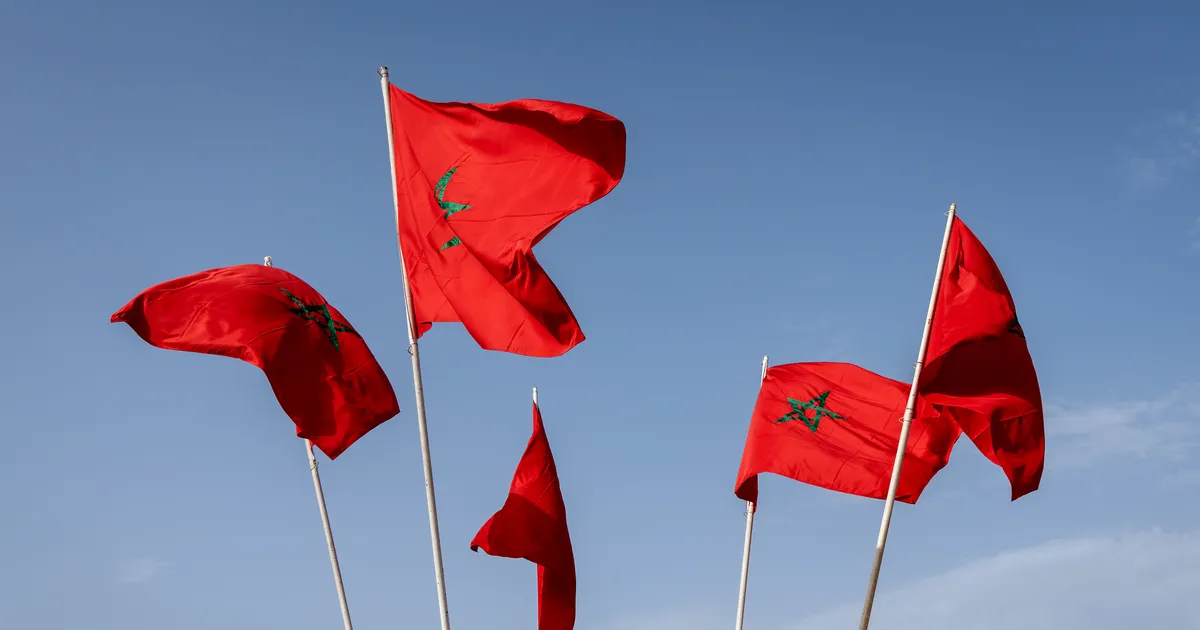
In Morocco, 18 November is a public holiday, so schools and government offices close and many families get together. Red flags with a green five-pointed star appear on facades, in the streets and at windows. TV and radio also look back at footage of the return of Mohammed V. Some families also take the day to visit relatives they have not seen for a while.
On Morocco Independence Day, some people wear their finest traditional clothes. For men, the djellaba and babouche slippers remain classics, while women often choose a kaftan or a takchita. Still, nobody imposes a dress code: everyone celebrates in their own way.
At the table, the holiday looks like a good family meal. You will often find couscous, a tagine, msemen or gazelle horns, with mint tea throughout. As for music, chaabi, gnawa or Andalusian music also accompany these reunions, depending on the region and on personal taste.
5Celebrating Eid al-Istiqlal in Belgium and across Europe
The Moroccan diaspora has lived in Belgium for several generations, and it also has deep roots in France, the Netherlands and Spain. For many families, Morocco Independence Day becomes a thread that links life here with roots over there.
In practice, the day often stays low-key: dinner at the parents' home, a call to relatives in Morocco, a flag at the window. In addition, cultural associations sometimes hold evenings, concerts or talks about Moroccan history. Check with those near you, because dates change every year.
Finally, it is a good moment to pass things on to children. Tell them about the sultan's return, show them family photos and bake grandmother's pastries together. That way, the holiday becomes a living memory instead of a date in a textbook.
6A time for meeting people and sharing cultures
A national day brings people closer. Over tea or a shared dish, people talk about their childhood, their home town and the way they see family. So Morocco Independence Day is a lovely chance to get to know each other, among Moroccans as well as with people from other cultures.
If your partner does not know Morocco yet, first explain what the date means. Tell the story of the exile and the return, then what it means to your family. Next, invite them to a meal: that is where the magic usually happens.
A few codes help guests feel at ease. For example, many homes ask visitors to take off their shoes, and guests taste everything and accept a second glass of tea. Neat clothes always please, and a small gift such as pastries or flowers usually touches the hosts. Above all, ask questions: sincere curiosity remains the best compliment.
7Celebrating from afar when you love across two countries
Do you live between Belgium and Morocco, or between two other countries? Distance does not stop you from sharing the holiday. For example, schedule a video call at dinner time and cook the same dish on each side. Even a short call over dessert can turn an ordinary evening into a shared celebration.
You can also send a parcel a few days before 18 November. A scarf in the colours of the flag, spices, a handwritten card: small gestures count more than the price. However, think about delivery times, which tend to grow longer between two countries.
Finally, share pictures of your day: the flag on the balcony, the table, the music of the moment. That way, Morocco Independence Day becomes a date for two, even with the sea between you.
8Unity, hospitality, pride: the values of the holiday
Above all, the holiday speaks of unity. Indeed, the national story honours the bond between the sultan and the people during the years of exile. Morocco also remembers that period on 20 August, with the Revolution of the King and the People.
It also speaks of hospitality, a value many Moroccans hold dear. People open their door, share bread and tea and make room for the guest. Many families take pride in never letting a visitor leave hungry. In a relationship, these simple gestures say a lot: they show that you welcome the other person as they are.
Finally, the holiday looks ahead. The speech of 18 November 1955 already called for building the country. Today, everyone can see it as an invitation to build something in their own way, whether a family, a couple or a shared project.
9Meeting someone who shares your traditions
Would you like to celebrate next 18 November with someone who understands what this date means? Or, on the other hand, with someone curious to discover your culture? Koeur24 is a serious dating site, free to join and available in French, English and Dutch. You need to be 18 or over to sign up.
In practice, you set the distance and age range of the profiles you see, and the conversation starts when the like is mutual. Every photo goes through an automatic check and then a manual review. Also, an optional selfie gives you the “Identity verified” badge. You can talk by audio or video call in the app, without sharing your number.
Of course, you stay in control: you can block or report any profile that makes you uncomfortable in a few seconds. So why not start with a simple message? By the next Morocco Independence Day, you may have someone special to send your wishes to.